
BLOG
THOUGHTS
&
MUSINGS
Today’s Citizens Must Equip Themselves For The Technological Future
Today, data and algorithms have influence over everything from our democracy, to our homes, to our work. We are in an era of seemingly unlimited technological progress and the speed of innovation requires citizens to be engaged in non-partisan learning and discussion. We don’t have to know everything but we need to know enough to think critically and ask questions about the technologies being developed, as well as be able to hold accountable the individuals and organizations creating them.
Originally posted on Medium on April 20, 2018

Kim Keever, Abstract 27001b, 2016
“If we don’t understand the technologies or other forces at play in changing our world — be they the burgeoning sciences of the early Renaissance or the neural networks or cyberthreats of today — then how can we possibly understand what is to come? ”
Today, data and algorithms have influence over everything from our democracy, to our homes, to our work. We are in an era of seemingly unlimited technological progress and the speed of innovation requires citizens to be engaged in non-partisan learning and discussion. We don’t have to know everything but we need to know enough to think critically and ask questions about the technologies being developed, as well as be able to hold accountable the individuals and organizations creating them.
Our Democracy
Those who expect to reap the blessings of freedom must, like men, undergo the fatigue of supporting it. — Thomas Paine: The American Crisis, №4, 1777
A need for deeper investigation and understanding was made abundantly clear when Facebook’s Mark Zuckerberg testified before congress. Too few of the members of congress were equipped with the right questions. As I listened to some of the hearing I could not help but wish that congress had met with Tristan Harris, former ethicist for Google, prior to the session. One of the benefits of the increased reporting around Russia’s interference in our most recent elections, is greater transparency around the role technology plays in our elections whether in the past, the present or the future.
Our Homes
While our culture is all gloss and pace on the outside, within it is too often haunted and lost. The commercial edge of so-called “progress” has cut away a huge region of human tissue and webbing that held us in communion with one another. We have fallen out of belonging. — John O’ Donohue, Bless The Space Between Us
Technology is pervasive in society and we must consciously consider that not all “progress” is progress for the common good. Consider for a moment who do smart homes benefit? Initially we may conclude that they increase efficiency for the purchaser but what about all of the data that is being collected by these smart homes? Perhaps smart homes feel too distant what about Amazon’s Alexa, its estimated that 39 million Americans now own a smart speaker. Recently there has been increased scrutiny over privacy concerns tied to Alexa’s collection of data and what exactly is being done with said data.

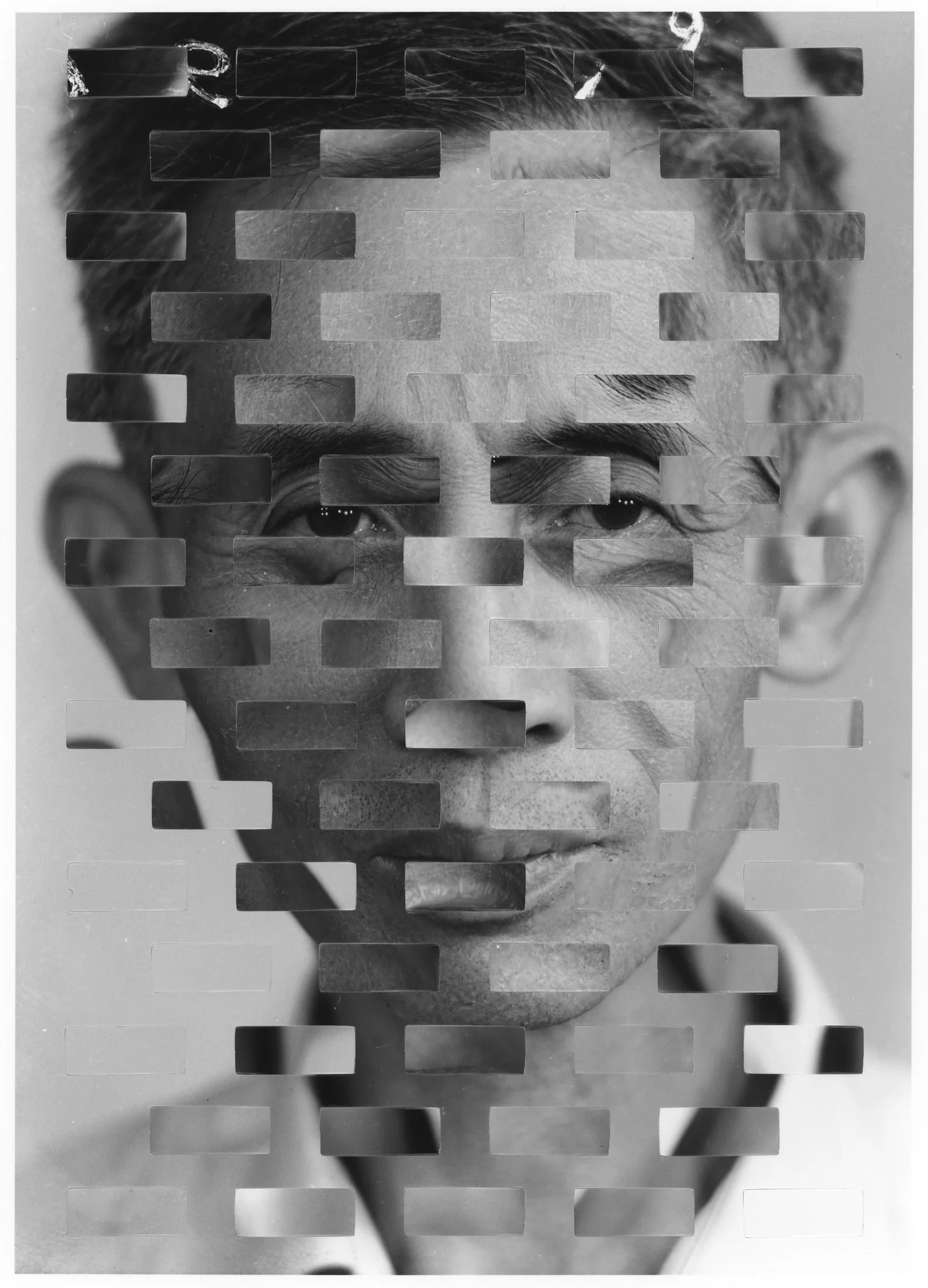
Kensuke Koike, No More No Less
Our Work
As machines do more of what was once human, companies and people who thrive will not be those who guess correctly at the next narrow skillsets, but who cultivate the capacity of their workers to learn faster. — Fulfilling The Promise of AI Requires Rethinking the Nature of Work Itself by Cathy Engelbert and John Hagel III
Our current education system, a relic of the industrial revolution, takes a myopic view and does not encourage students in multi-disciplinary learning/systems thinking producing graduates with limited job options. It has been said that “we need to teach artificial intelligence to adopt our values” but how do we do this when schools devalue subjects such as ethics for engineers and when we can’t even agree on our baseline values? Our corporations are not much better, treating employees as cogs in a machine instead of as human capital whose value increases with the acquiring of new skills.
Our Future
A new consciousness is awakening that recognizes our oneness as a global community. — Jalaja Bonheim
All of this is not to cast a hopelessness but to empower us to realize we as engaged citizens play a very important role in the direction that our society heads in. We can no longer count on the fragmented religious, community and political institutions we once did or even the new corporations taking their place. Instead we must move from the role of observers to active participants, in every area:
- Breaking out of partisan siloes and biases which do not serve the common good and cultivating belonging.
- Pro-actively taking control of our personal knowledge framework and the information we are absorbing.
- Encouraging the corporations we work for to become anchor institutionsthat develop wealth in our cities (not just exploiting the talent and resources).
Thank you for taking the time to read this post, please comment as this is something I am very passionate about and I am curious to hear your thoughts. I will leave you with this final quote as well as some resources if you are interested in digging into any of these areas in a deeper way.
Technological shifts will be only a part of the cascading disruptions associated with the new era. As history shows, these shifts will, in turn, change human behaviors, open new areas to human understanding, enable new forms of creative expression, empower new means of economic activity, and inspire new thinking about the way lives and governments and businesses should be organized. These changes will empower the reweaving of the fabric of our lives much as the steam-powered looms of the Industrial Revolution did not only with textiles but with the lives of workers, the rise of a new middle class, the empowerment of unions, the recasting of politics, the remaking of the relationships associated with colonialism, the shifting of the power of nation-states, and so many other changes. — The Great Questions of Tomorrow, David Rothkopf
Thought Leaders
- Tristan Harris, Former Google Ethicist, Co-Founder of Humane Tech
- Harold Jarche, Life in Perpetual Beta
Learn More
- If you are wondering what questions you should be asking that you aren’t then check out the thought provoking “The Great Questions of Tomorrow” by David Rothkopf.
- In Braving The Wilderness by Brene Brown, Brene Brown identifies the dehumanization that is happening in today’s culture and how it’s the breeding ground for hate, nationalism and us vs them thinking. There is an urgent need for us as citizens to break out of our siloes and engage in the uncomfortable conversations.
- Harold Jarche’s blog and e-books provides brilliant information around developing a Personal Knowledge Mastery system.
- Last but not least, if all of this feels a little bit overwhelming consider starting with Micromastery: Learn Small, Learn Fast, and Unlock Your Potential to Achieve Anything: Robert Twigger.
Tool(s)
• Diigo — Not only can you filter your online resources in this social bookmark system but you can also annotate PDF’s, import Kindle highlights, and create outlines. I actually created the outline for this post in this app.
• Google Alerts — Set alerts for topics you are interested in or even better ones that you know you need to learn more about.
Seattle Job Opportunities

Hi Seattle! I have had a couple of job opportunities come on to my radar that I wanted to share with my network. Specifically, the following roles: assistant to a jewelry designer, junior, senior & associate designer (fashion), fashion intern, and executive admin at a local tech startup.
If you are interested in any of these positions please message me at info@uncommoncartography.com with your resume and I can connect you with the hiring managers.
Best,
Esther
9e2 Seattle Exploring the Intersection of Art, Science, and Technology

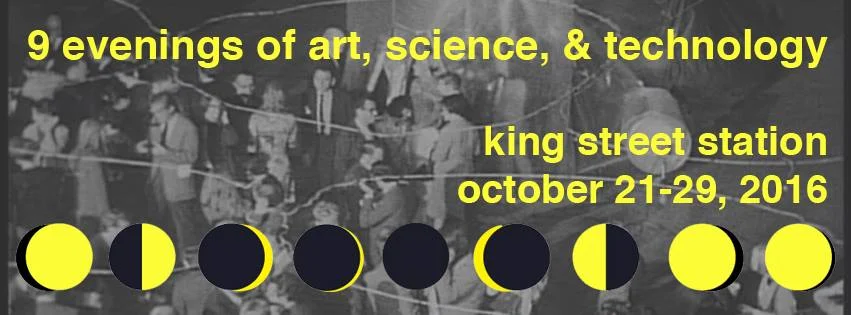
9e2 is an art exhibition and performance series commemorating “9 Evenings: Theatre & Engineering,” an iconic exhibition 50 years ago in New York that sparked a new era of collaboration between artists, scientists, and engineers.
The original 9 Evenings was organized in 1966 by Robert Rauschenberg and Billy Klüver, and featured artists creating performances in collaboration with engineers from Bell Labs. Fifty years later, 9e2 embraces that same spirit of experimentation and collaboration with a new series of projects. Installations, nightly performances, and other events will explore the intersection of art, science, and technology.