
BLOG
THOUGHTS
&
MUSINGS
Today’s Citizens Must Equip Themselves For The Technological Future
Today, data and algorithms have influence over everything from our democracy, to our homes, to our work. We are in an era of seemingly unlimited technological progress and the speed of innovation requires citizens to be engaged in non-partisan learning and discussion. We don’t have to know everything but we need to know enough to think critically and ask questions about the technologies being developed, as well as be able to hold accountable the individuals and organizations creating them.
Originally posted on Medium on April 20, 2018

Kim Keever, Abstract 27001b, 2016
“If we don’t understand the technologies or other forces at play in changing our world — be they the burgeoning sciences of the early Renaissance or the neural networks or cyberthreats of today — then how can we possibly understand what is to come? ”
Today, data and algorithms have influence over everything from our democracy, to our homes, to our work. We are in an era of seemingly unlimited technological progress and the speed of innovation requires citizens to be engaged in non-partisan learning and discussion. We don’t have to know everything but we need to know enough to think critically and ask questions about the technologies being developed, as well as be able to hold accountable the individuals and organizations creating them.
Our Democracy
Those who expect to reap the blessings of freedom must, like men, undergo the fatigue of supporting it. — Thomas Paine: The American Crisis, №4, 1777
A need for deeper investigation and understanding was made abundantly clear when Facebook’s Mark Zuckerberg testified before congress. Too few of the members of congress were equipped with the right questions. As I listened to some of the hearing I could not help but wish that congress had met with Tristan Harris, former ethicist for Google, prior to the session. One of the benefits of the increased reporting around Russia’s interference in our most recent elections, is greater transparency around the role technology plays in our elections whether in the past, the present or the future.
Our Homes
While our culture is all gloss and pace on the outside, within it is too often haunted and lost. The commercial edge of so-called “progress” has cut away a huge region of human tissue and webbing that held us in communion with one another. We have fallen out of belonging. — John O’ Donohue, Bless The Space Between Us
Technology is pervasive in society and we must consciously consider that not all “progress” is progress for the common good. Consider for a moment who do smart homes benefit? Initially we may conclude that they increase efficiency for the purchaser but what about all of the data that is being collected by these smart homes? Perhaps smart homes feel too distant what about Amazon’s Alexa, its estimated that 39 million Americans now own a smart speaker. Recently there has been increased scrutiny over privacy concerns tied to Alexa’s collection of data and what exactly is being done with said data.

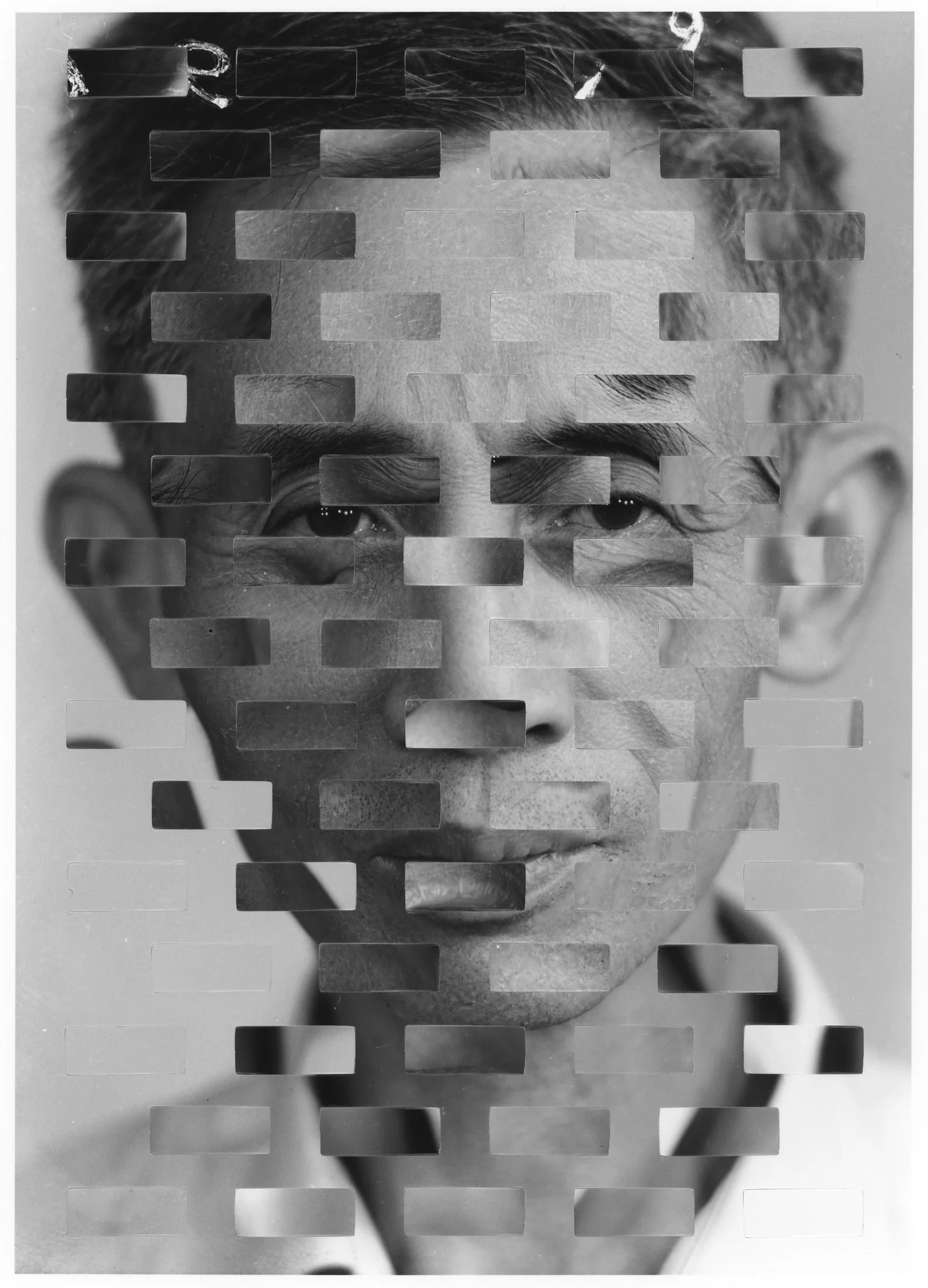
Kensuke Koike, No More No Less
Our Work
As machines do more of what was once human, companies and people who thrive will not be those who guess correctly at the next narrow skillsets, but who cultivate the capacity of their workers to learn faster. — Fulfilling The Promise of AI Requires Rethinking the Nature of Work Itself by Cathy Engelbert and John Hagel III
Our current education system, a relic of the industrial revolution, takes a myopic view and does not encourage students in multi-disciplinary learning/systems thinking producing graduates with limited job options. It has been said that “we need to teach artificial intelligence to adopt our values” but how do we do this when schools devalue subjects such as ethics for engineers and when we can’t even agree on our baseline values? Our corporations are not much better, treating employees as cogs in a machine instead of as human capital whose value increases with the acquiring of new skills.
Our Future
A new consciousness is awakening that recognizes our oneness as a global community. — Jalaja Bonheim
All of this is not to cast a hopelessness but to empower us to realize we as engaged citizens play a very important role in the direction that our society heads in. We can no longer count on the fragmented religious, community and political institutions we once did or even the new corporations taking their place. Instead we must move from the role of observers to active participants, in every area:
- Breaking out of partisan siloes and biases which do not serve the common good and cultivating belonging.
- Pro-actively taking control of our personal knowledge framework and the information we are absorbing.
- Encouraging the corporations we work for to become anchor institutionsthat develop wealth in our cities (not just exploiting the talent and resources).
Thank you for taking the time to read this post, please comment as this is something I am very passionate about and I am curious to hear your thoughts. I will leave you with this final quote as well as some resources if you are interested in digging into any of these areas in a deeper way.
Technological shifts will be only a part of the cascading disruptions associated with the new era. As history shows, these shifts will, in turn, change human behaviors, open new areas to human understanding, enable new forms of creative expression, empower new means of economic activity, and inspire new thinking about the way lives and governments and businesses should be organized. These changes will empower the reweaving of the fabric of our lives much as the steam-powered looms of the Industrial Revolution did not only with textiles but with the lives of workers, the rise of a new middle class, the empowerment of unions, the recasting of politics, the remaking of the relationships associated with colonialism, the shifting of the power of nation-states, and so many other changes. — The Great Questions of Tomorrow, David Rothkopf
Thought Leaders
- Tristan Harris, Former Google Ethicist, Co-Founder of Humane Tech
- Harold Jarche, Life in Perpetual Beta
Learn More
- If you are wondering what questions you should be asking that you aren’t then check out the thought provoking “The Great Questions of Tomorrow” by David Rothkopf.
- In Braving The Wilderness by Brene Brown, Brene Brown identifies the dehumanization that is happening in today’s culture and how it’s the breeding ground for hate, nationalism and us vs them thinking. There is an urgent need for us as citizens to break out of our siloes and engage in the uncomfortable conversations.
- Harold Jarche’s blog and e-books provides brilliant information around developing a Personal Knowledge Mastery system.
- Last but not least, if all of this feels a little bit overwhelming consider starting with Micromastery: Learn Small, Learn Fast, and Unlock Your Potential to Achieve Anything: Robert Twigger.
Tool(s)
• Diigo — Not only can you filter your online resources in this social bookmark system but you can also annotate PDF’s, import Kindle highlights, and create outlines. I actually created the outline for this post in this app.
• Google Alerts — Set alerts for topics you are interested in or even better ones that you know you need to learn more about.
Illuminate The Wonder

As I am writing this post I am listening to Pharrell Williams song Freedom, it is so perfect and the lyrics get me every time:
The atoms in the air Organisms in the sea The Sun, and yes, man Are made of the same things
An important role of artists is to illuminate the beauty and wonder of their world. As you are reading this you should know that I believe artists come in a variety of professions, a person does not have to go by the title "artist" there are engineers, physicists, and scientists who are incredibly creative in how they articulate the world which they see. Recently, as I was watching Madam Secretary there was a brilliant conversation which took place between the characters of a poet laureate and a physicist. The conversation begins with the physicist explaining about poetry, "sometimes it can be ever so slightly indulgent, unnecessarily convoluted, redundant, also pretentious, arrogant and not essential to the evolution of mankind.." to which the poet laureate responds "how do you live with such an unimaginative reductionist view of the world, how is life without the residence of beauty even worth the effort?" to which the physicist says:
Let me tell you a little something about beauty Mr. Hobbs, you seem to think I can't appreciate beauty because I study the intricacies of it's components. It was Richard Feynman, physicist/personal hero of mine, who put it best he said he could appreciate the beauty of a flower more than say uh you. He said he could see more than the average man sees, he could imagine it's cells, he could appreciate the flower evolved in order to make its colors more attractive to insects which means that insects see color. Maybe they share our aesthetic sense, recognizing the majesty of the quantum world only adds to the beauty of life, it does not subtract. So to answer your question Mr. Hobbs I don't just live in a beautiful world, I understand it.
One thing which really excited me about the above quote was that I actually knew who Richard Feynman was! A year or so ago I met his work online during a rabbit trail of sorts, I was reading an article about Bill Gates love of books which led to my discovery he also considers Feynman a hero and had worked to have his lectures brought online. Being able to know something so utterly outside of my profession, gave me the ability to appreciate another layer of the story being told by the writer of Madam Secretary and that is just a hint of the happiness one feels when equipped with information/knowledge from outside of your area of expertise.
Unfortunately, it has become quite popular for individuals, professions, and cultures to be siloed which kind of seems crazy considering globalization and the unprecedented access we have to information and ideas. But so many of these algorithms which give us the results of where we should eat, what book to purchase, etc. are driven by business goals:
Just like the food industry manipulates our innate biases for salt, sugar and fat with perfectly engineered combinations, the tech industry bulldozes our innate biases for Social Reciprocity (we’re built to get back to others), Social Approval (we’re built to care what others think of us), Social Comparison (how we’re doing with respect to our peers) and Novelty-seeking (we’re built to seek surprises over the predictable). - Tristan Harris, Tech Companies Design Your Life ... The more choices technology gives us in nearly every domain of our lives (information, events, places to go, friends, dating, jobs) — the more we assume that our phone is always the most empowering and useful menu to pick from.
We need our smartphones, notifications screens and web browsers to be exoskeletons for our minds and interpersonal relationships that put our values, not our impulses, first. - Tristan Harris, How Technology Hijacks People's Minds
With the latest election, a mirror was held up to the nation and many individuals realized the siloed lives that they were living, far too many had been in echo chambers. It seems the more life is spent online, the more narrow things become if we are not careful, which I know sounds absolutely crazy as I am writing this. A big part of my job is to be online, because of that I feel that in some ways I am way too plugged in or tied to technology. To balance this a bit, the last couple of weeks, I have been immersing myself in books about Natural History and Science, areas which are typically weak spots for me. These are not books which Google, Amazon, etc. would recommend to me, I have had to intentionally seek them out. Ask yourself when was the last time that you looked offline for inspiration (not to just immediately share online), to meet someone, to learn about something?
We grow less and less patient for reality as it is, especially when it’s boring or uncomfortable. We come to expect more from the world, more rapidly. And because reality can’t live up to our expectations, it reinforces how often we want to turn to our screens. A self-reinforcing feedback loop. ... When you could have sex with the person of your dreams, or fly through jungles in the Amazon rainforest while looking over at your best friend flying next to you, who would want to stick with reality? - Tristan Harris, Tech Companies Design Your Life
We need to learn how to illuminate the wonder of the world right here and now. I feel a key to how we will do this is by venturing outside of our echo chambers and comfort zones, going deeper in our research of areas where in the past we may have only scraped the surface or where we may have become so rigid in our beliefs that we no longer allow for curiosity and questioning.
Since the late Renaissance, on through the Enlightenment and into the Industrial era, we have witnessed this tendency to segregate disciplines. Why do we continue with it? Why should someone who wants to pursue a career as a physicist suddenly stop learning about music and art in their mid-teens and focus only on mathematics and the sciences? Is it not the case that certain poets and novelists have disseminated the wonders of scientific discovery to a broader audience than a scientist alone could reach? - Richard Martin, The Neo-Generalist, Interview with Scenario Magazine
Let's not let our professions or specialization limit us from a broader perspective on the world. Because I think now more than ever is a time for the unveiling of a new generation of renaissance men and women, who are "outstandingly versatile, well-rounded".
Ps: Seattle Art Museum is having a Three-Day Free Day weekend January 20-22, 2017 it would be the perfect time to do a little offline exploring.
Photography By: Palm Maison